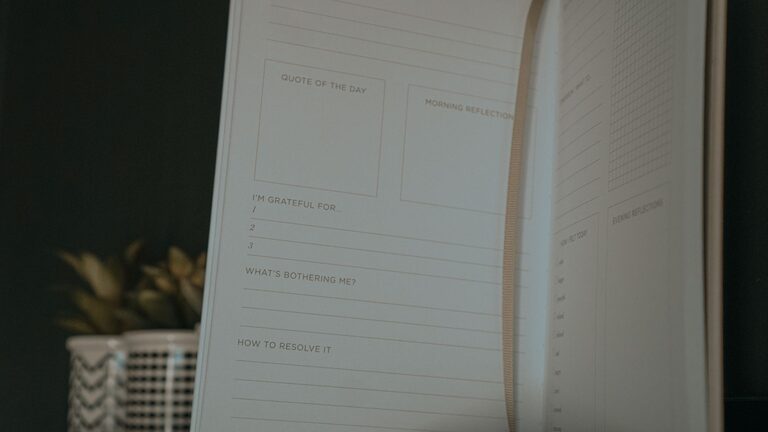

Journaling is more than just putting pen to paper—it’s a powerful tool to clear your mind, organize your thoughts, and enhance your focus throughout the day. Whether you’re feeling overwhelmed, stuck, or simply want to improve your productivity, journaling can help you gain clarity and direction. This post will guide you through practical steps to journal effectively for clarity and focus.
Why Journal for Clarity and Focus?
Our minds often juggle multiple thoughts, worries, and plans at once. This mental noise can make it hard to concentrate and make decisions. Journaling helps by transferring those swirling thoughts onto paper where you can see, understand, and manage them better.
By regularly journaling with intention, you:
– Reduce mental clutter
– Prioritize tasks and goals
– Identify distractions and patterns
– Enhance self-awareness
– Improve problem-solving and creativity
Getting Started: Choosing Your Journal and Environment
Before diving in, pick a journal that you enjoy writing in—this could be a physical notebook, a digital app, or a combination. Choose a quiet, comfortable space where you won’t be interrupted. Establishing a consistent routine, such as journaling in the morning or before bed, sets the tone for clarity.
Step 1: Start with a Brain Dump
A brain dump means writing down whatever is on your mind—thoughts, worries, to-dos, ideas, or feelings. Don’t filter or organize during this step; simply let the words flow.
How to do it:
– Set a timer for 5–10 minutes.
– Write continuously without stopping to edit or judge.
– Include everything, big or small.
This process clears out mental clutter, so your mind feels lighter and you can better focus on what matters next.
Step 2: Identify Priorities and Set Intentions
Once your brain dump is complete, review what you’ve written and highlight key points, tasks, or concerns. This helps to clarify what requires attention.
Try these prompts:
– What are the top 3 things I need to focus on today?
– What’s one important goal I want to make progress on?
– What distractions should I minimize?
Write down your intentions based on these reflections. Setting clear goals increases your focus and motivation.
Step 3: Use Structured Journaling Techniques
Different journaling formats can help deepen clarity and focus. Here are some popular methods:
Bullet Journaling
A flexible system using bullets, symbols, and short sentences. It’s great for organizing tasks, tracking habits, and reflecting briefly.
Morning Pages
Popularized by Julia Cameron’s “The Artist’s Way,” morning pages involve writing three pages of stream-of-consciousness every morning. This practice clears your mind and stimulates creativity.
Gratitude Journaling
Listing things you’re grateful for shifts your mindset to positivity, which indirectly improves mental clarity and reduces stress.
Mind Mapping
Creating diagrams that connect ideas visually helps organize complex thoughts and identify relationships.
Try experimenting with one or a combination to find what works best for you.
Step 4: Reflect and Review Regularly
Set aside time weekly or monthly to review your journal entries. Notice patterns in your thoughts and behaviors. Ask yourself:
– What distractions commonly arise?
– Which tasks did I accomplish?
– What goals need adjusting?
Reflection reinforces mindfulness, making your journaling practice more purposeful.
Tips for Maintaining a Consistent Journaling Habit
– Keep your journal accessible to encourage spontaneous writing.
– Don’t aim for perfection; focus on honest expression.
– Use prompts or questions when unsure what to write.
– Celebrate small wins and progress in your entries.
– Be patient; clarity and focus improve gradually with practice.
Final Thoughts
Journaling is a simple, flexible habit that can transform the way you think and work. By regularly capturing your thoughts, prioritizing your goals, and reflecting on your progress, you’ll find greater clarity in your daily life and improved focus on what matters most.
Start today with a few minutes of writing, and watch your mind become calmer, clearer, and more productive. Happy journaling!
About the Author